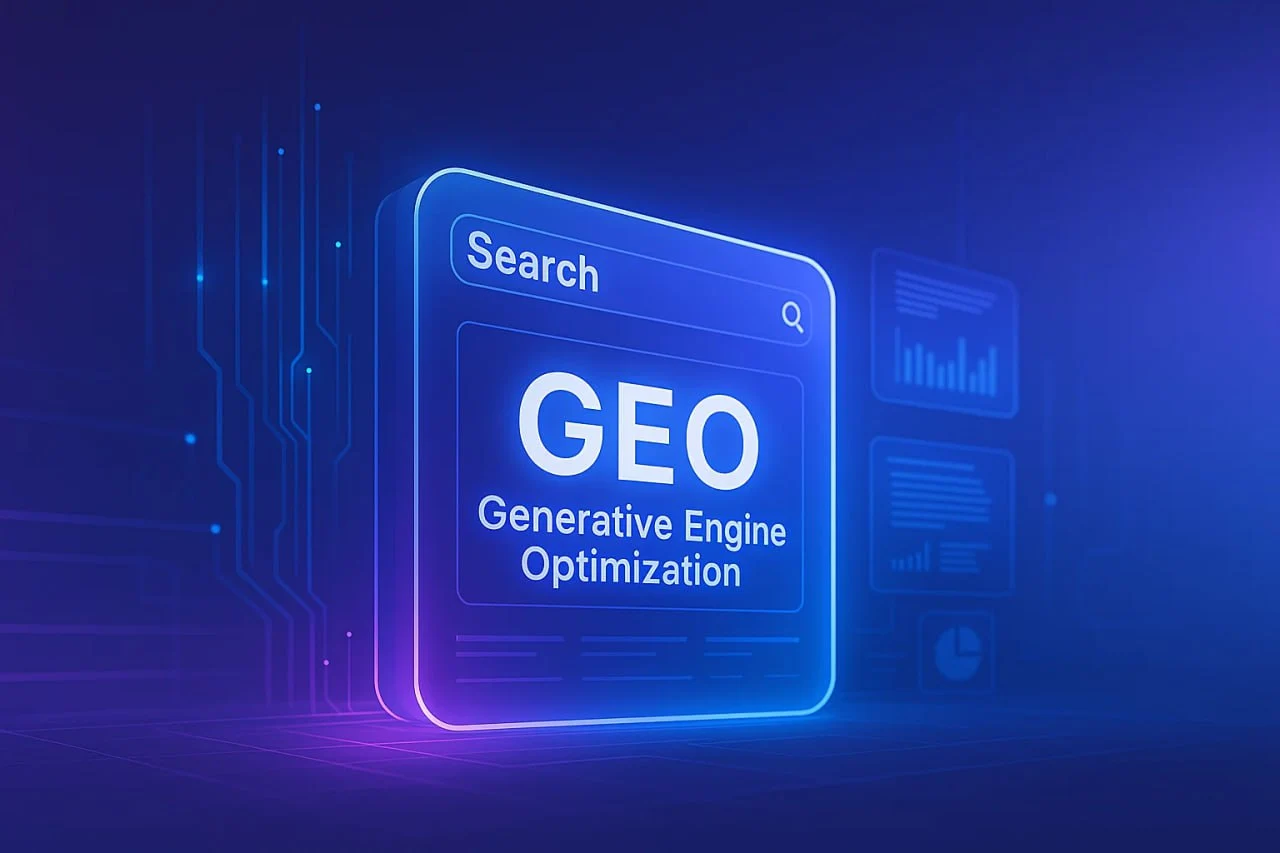
Generative Engine Optimization (GEO) is a discipline within digital optimization that focuses on how generative artificial intelligence systems interpret, select, and reference information when producing synthesized responses to user queries. For much of the past two decades, visibility in digital search environments was primarily shaped by traditional search engines, where optimization efforts centered on ranking webpages within ordered result lists. Generative systems operate differently by producing a single consolidated response rather than presenting multiple ranked links.
As generative AI platforms increasingly mediate information discovery, content selection is influenced by factors such as semantic relevance, authority signals, and entity relationships rather than page-level rankings alone. GEO addresses this shift by emphasizing inclusion within AI-generated outputs instead of position within search results. The objective of GEO is to improve how content and entities are interpreted, contextualized, and incorporated by generative systems at the time an answer is produced.
Within this framework, GEO focuses on strengthening the signals that generative models rely on when constructing responses, including topical clarity, authoritative references, and consistent entity representation across the web. Rather than optimizing for visibility on a results page, GEO seeks to influence whether information is selected as part of the generated answer itself. This approach reflects the changing mechanics of information retrieval in AI-mediated environments.

What Is Generative Engine Optimization
Generative Engine Optimization (GEO) refers to the process of improving how generative artificial intelligence systems interpret, classify, and incorporate information when producing synthesized responses to user queries. Unlike traditional search engine optimization, which primarily aims to improve the ranking position of individual webpages within search results, GEO focuses on influencing whether information is selected and included within an AI-generated answer.
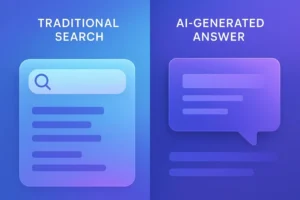
Generative systems do not present users with multiple ranked links. Instead, they generate a consolidated response based on patterns derived from training data, contextual relevance, and confidence signals associated with recognized entities and sources. Within this environment, visibility depends less on page-level ranking factors and more on how content is understood, contextualized, and trusted by the generative model.
GEO addresses this distinction by emphasizing factors such as semantic clarity, entity consistency, authoritative references, and the broader digital context in which information appears. Rather than optimizing for placement within a list of results, GEO seeks to improve the likelihood that specific information or entities are incorporated directly into the generated output. In this sense, traditional SEO and GEO operate on different layers of the information retrieval process, with SEO influencing discovery and GEO influencing selection.
Why Generative Engine Optimization Matters
Generative search systems operate using mechanisms that differ fundamentally from traditional search engines. Rather than ranking webpages based on keyword relevance, link profiles, and page structure, generative models synthesize responses by evaluating patterns across large datasets, confidence signals associated with sources, and relationships between recognized entities. As a result, visibility within generative outputs depends on factors that extend beyond conventional SEO signals.
Several characteristics of generative systems explain why GEO has become increasingly relevant.
1. Generative Systems Produce Consolidated Answers
Generative engines typically return a single synthesized response instead of multiple ranked webpages. Information that is not sufficiently represented within the model’s contextual understanding or entity framework is unlikely to appear in the generated output. This shifts the focus from page-level ranking to inclusion within the response itself.
2. Source Authority Influences Content Selection
Generative models tend to prioritize information associated with sources that demonstrate consistent authority signals across the web. These signals often include repeated mentions within established publications, editorial coverage, and structured knowledge repositories. Information originating from isolated or weakly connected sources is less likely to be selected during response generation.
3. Entity Recognition Plays a Central Role
Generative systems organize information around entities, such as organizations, services, and topics. The clarity and consistency of entity representation influence how information is categorized and retrieved. Inconsistent or incomplete entity signals can reduce the likelihood that related information is incorporated into generated answers.
4. Page-Level Optimization Alone Is Insufficient
While traditional SEO techniques remain relevant for discovery, page-level optimization does not guarantee inclusion within generative outputs. Information that lacks corroboration across external sources or broader contextual signals may be omitted even if the underlying page is well optimized. GEO addresses this limitation by focusing on signals that extend beyond a single website.
5. Information-Seeking Behavior Has Evolved
Generative interfaces increasingly mediate how users seek recommendations, explanations, and comparisons. Instead of navigating between multiple sources, users rely on synthesized responses that resemble expert summaries. This change places greater emphasis on how information is interpreted and selected by generative systems rather than how it is ranked within search results.
How Generative Engine Optimization Works
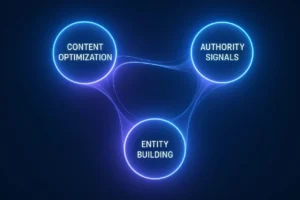
Generative Engine Optimization (GEO) is not a single tactic but a multi-layered framework that addresses how information is interpreted, contextualized, and selected by generative artificial intelligence systems. Rather than focusing on page-level ranking signals, GEO operates across multiple layers of content representation, entity recognition, and external signal reinforcement. These layers collectively influence whether information is incorporated into AI-generated responses.
Three foundational components are commonly associated with GEO frameworks.
1. Answer-Ready Content Structure
Generative systems favor content that is structured, semantically clear, and directly aligned with informational intent. Instead of relying on keyword frequency or traditional ranking heuristics, these systems analyze clarity, topical coherence, and contextual relevance when extracting information for response generation.
Answer-ready content typically includes clearly defined concepts, concise explanatory language, consistent terminology, and logically organized sections that summarize key information. Such structures reduce ambiguity and allow generative models to identify, interpret, and reuse information more reliably within synthesized outputs.
2. Entity Representation and Contextual Signals
Generative models organize information through entity-based frameworks that map relationships between organizations, services, concepts, and topics. The strength and consistency of entity representation across the web influence how information is categorized and retrieved.
Entity-focused optimization emphasizes consistent naming, contextual alignment, structured data usage, and recurring mentions across authoritative and thematically relevant sources. Repetition of these signals across multiple environments contributes to clearer entity recognition within generative systems.
3. External Information Distribution and Exposure
Generative models derive knowledge from publicly accessible information sources. The distribution of information across established publications, industry resources, and knowledge repositories affects how prominently concepts and entities are represented within a model’s internal context.
Broader exposure across diverse, reputable sources increases the likelihood that information is recognized as relevant and reusable during response generation. This process supports the inclusion of information within generative outputs without reliance on a single originating webpage.
Implications for Digital Visibility
The increasing use of generative interfaces reflects a shift in how users access information. Rather than navigating between multiple sources, users often rely on consolidated responses that function as synthesized summaries. Within this environment, visibility is determined by relevance, contextual authority, and entity alignment rather than by ranking position alone.
As generative systems continue to mediate information discovery, optimization strategies increasingly emphasize how information is interpreted and selected by these systems. GEO addresses this requirement by focusing on the mechanisms that influence inclusion within generated responses, complementing traditional optimization approaches that prioritize discoverability.

Industry Approaches to Generative Engine Optimization
Organizations applying Generative Engine Optimization frameworks typically combine multiple optimization layers to improve how information is interpreted and selected by generative systems. These approaches integrate content structuring, entity representation, and external signal reinforcement to strengthen visibility within AI-generated responses.
Common components observed in GEO implementations include the creation of answer-oriented content formats, the distribution of information across authoritative publications, and the reinforcement of entity signals through consistent references across the web. Structured data and semantic markup are often used to improve contextual clarity, while external mentions and citations contribute to broader recognition within generative knowledge environments.
By combining these elements, GEO-oriented strategies aim to establish information that is both contextually clear and widely corroborated, increasing the likelihood of inclusion within synthesized responses generated by AI systems.
Conclusion
Generative Engine Optimization can be understood as an extension of traditional digital optimization practices into environments where information is synthesized rather than ranked. As generative interfaces increasingly mediate how users access explanations, recommendations, and comparisons, the mechanisms that determine visibility have shifted toward contextual relevance, authority signals, and entity alignment.
GEO addresses these mechanisms by focusing on how information is interpreted and selected during response generation. Rather than replacing established optimization approaches, GEO complements them by accounting for the behavior of generative systems that construct answers dynamically. This framework reflects the evolving structure of information discovery in AI-mediated environments.